
Winter completely changes the rhythm of travel in France. Cities that feel crowded, lively, and fast-paced during the summer become calmer, slower, and more introspective when winter arrives. As tourist groups disappear, cities seem to return to themselves, offering visitors a more genuine experience. This season is ideal for those who want to explore France not through rushed sightseeing, but through feeling and observing.
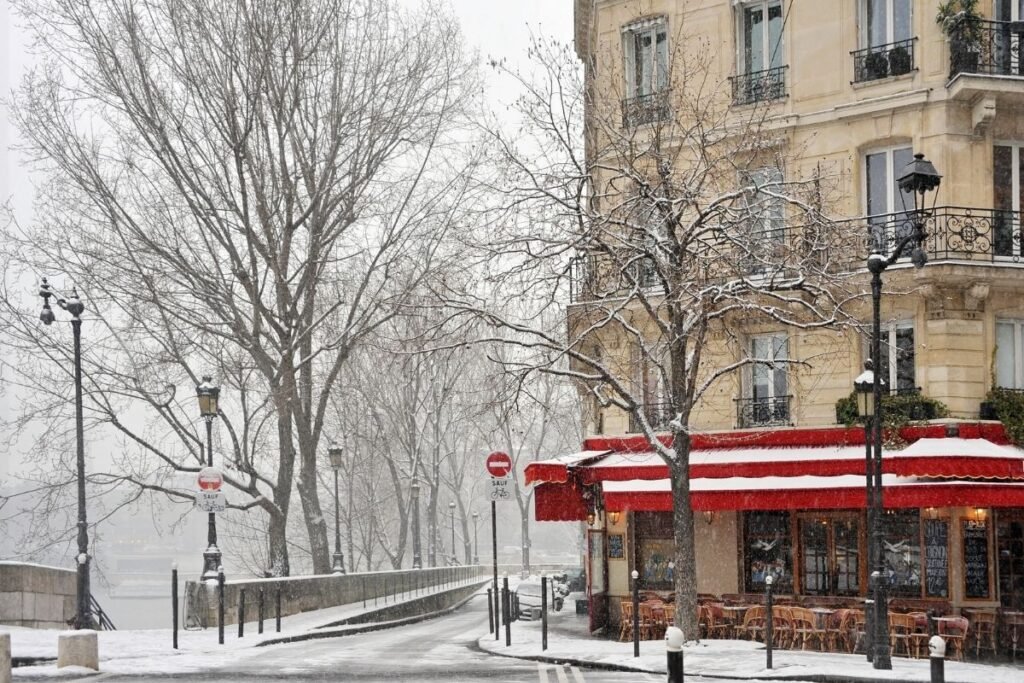
Walking through quiet French cities in winter reveals details that often go unnoticed during busier months. The pace of the streets slows down, conversations in cafés last longer, and the connection with the city becomes more personal. The calm brought by the season transforms travel from an act of consumption into a deeper experience. For this reason, winter is one of the most suitable times to embrace the slow travel mindset in France.
The reduction in crowds does not only create physical comfort but also mental ease. Shorter queues at museums, a calmer atmosphere in restaurants, and the freedom to walk without rushing all change the nature of travel. Being in a French city during winter feels less like visiting and more like briefly living there.
This sense of quiet is not limited to major cities. Smaller and mid-sized French towns gain a stronger identity during winter months. As daily life slows down, the architecture, light, and texture of the cities become more noticeable. The soft winter light adds a subtle, melancholic warmth to the streets.
Quiet French cities in winter offer a strong alternative for travelers who are not seeking speed or intensity. This season encourages wandering without plans, long walks, and simply observing the place you are in. Discovering France in this way creates a more intimate and lasting connection with the country.
This article serves as a starting point, showing that calm and slow travel in France is possible during winter. In the next articles, cities, regions, and routes where this quiet atmosphere is most strongly felt will be explored in more detail.